
The Breitling Exospace B55 sits in an unusual part of the brand’s history. It arrived when Swiss watchmakers were deciding how much connected technology belonged in a traditional watch, and Breitling’s answer was very different from the full-screen smartwatch approach. The original B55 kept a recognisable analogue dial, added two digital displays and used a phone as a practical companion rather than making the watch feel like a small computer on the wrist.
That distinction matters when looking back at the model today. The older version of this article treated the B55 largely as a product to sell, but the more interesting story is how Breitling tried to combine aviation-led functionality with connected features. For readers following YouReplica’s Breitling replica watch coverage, the B55 is useful because its design gives us several specific details to compare rather than relying on broad claims about quality.
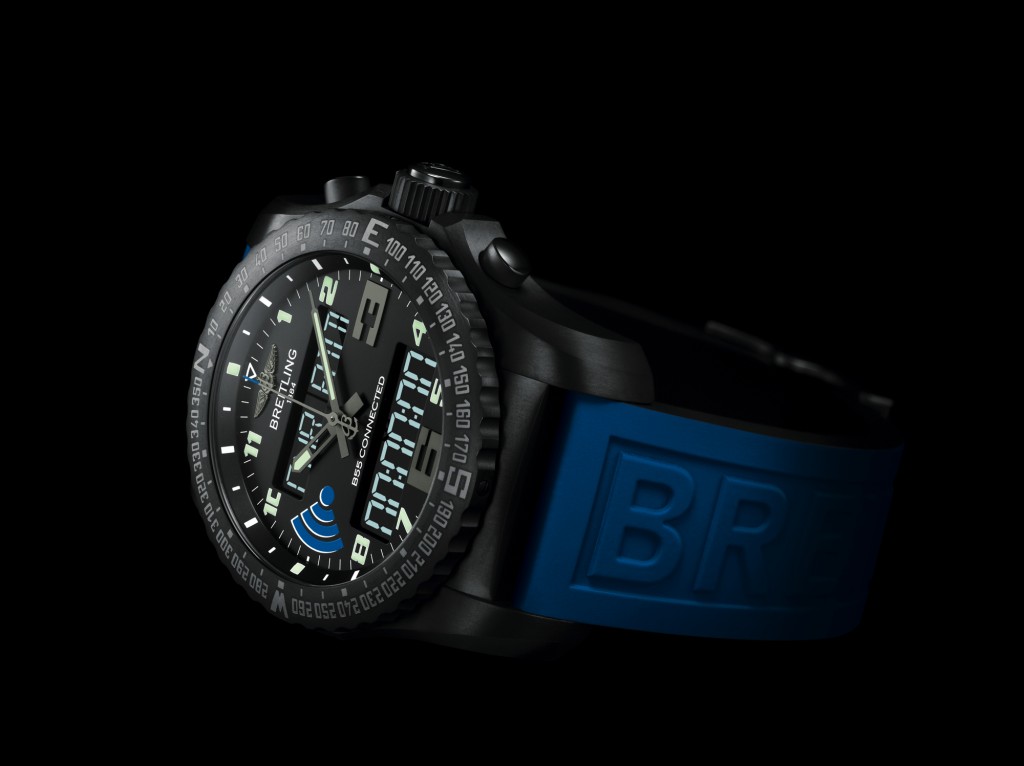
A Connected Breitling Rather Than a Miniature Phone
The genuine Exospace B55 was designed around a titanium case, rubber strap and a dial that mixed conventional hands with digital information. Its phone connection could be used for functions such as setting the time and time zone, while notifications for calls, messages, email and calendar events added a connected layer to the watch. It was not built around activity tracking, which helps explain why it still looks more like a Breitling instrument watch than a general-purpose smartwatch.
The most distinctive part is the visual balance. The analogue hands remain dominant, while the rectangular displays sit within a dial that is still recognisably Breitling. The pushers, crown and case architecture give the watch a purposeful character, and the lightweight appearance of the titanium case is part of that identity. Those details make the Breitling Exospace B55 connected design more interesting than simply asking whether it can receive a notification from a phone.
There is also a practical reason the model deserves a separate place in the brand’s history. Connected technology ages quickly, but physical watch design tends to age more slowly. The B55 now reads as a snapshot of the point where traditional Swiss watchmaking began testing a more digital relationship with the wearer. That makes the model useful for understanding Breitling’s approach to technology, even if the software side no longer feels new.
What Matters on a Replica Version
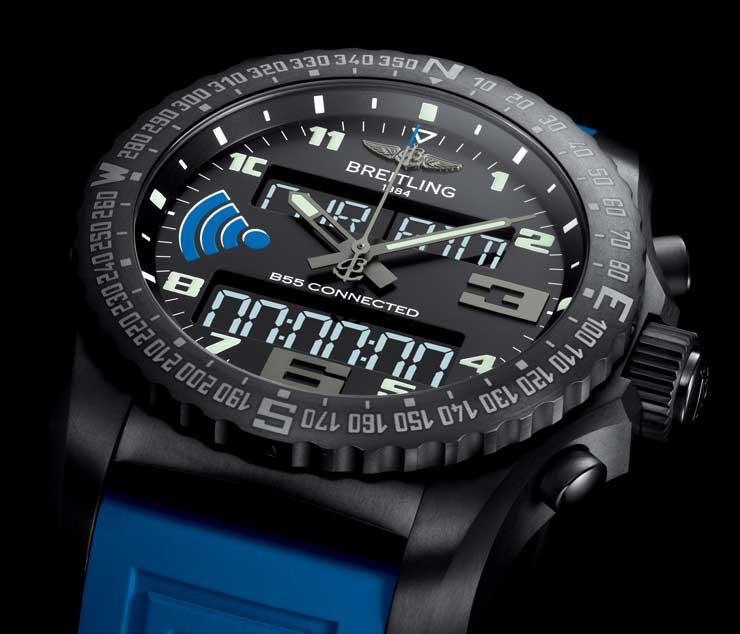
A replica version should not be assumed to reproduce the genuine watch’s connected functions. Visual similarity and electronic functionality are separate questions. For a Breitling Exospace B55 replica watch, the useful checks start with the case shape, display size, dial printing, position of the pushers and the way the crown sits against the case.
The dual digital display layout is especially important because small errors are easy to notice on such a structured dial. A display that is too large, too bright or incorrectly positioned can change the character of the whole watch. The same applies to the hands and hour markers. Their proportions need to work around the digital windows rather than competing with them.
Case material is another area where photographs can be misleading. The original B55’s titanium construction contributes to its visual and physical character, so a heavier case with a different surface finish may feel very different even when the dimensions look close. The rubber strap, clasp, pushers and crown also deserve attention because they account for much of the watch’s tool-like appearance.
Readers comparing older connected models can browse the site’s Breitling replica archive for related references. The important point is to separate connected watch functionality from replica watch design accuracy. The B55 is interesting because it demands both kinds of comparison, but one should never be assumed simply because the other looks convincing.
