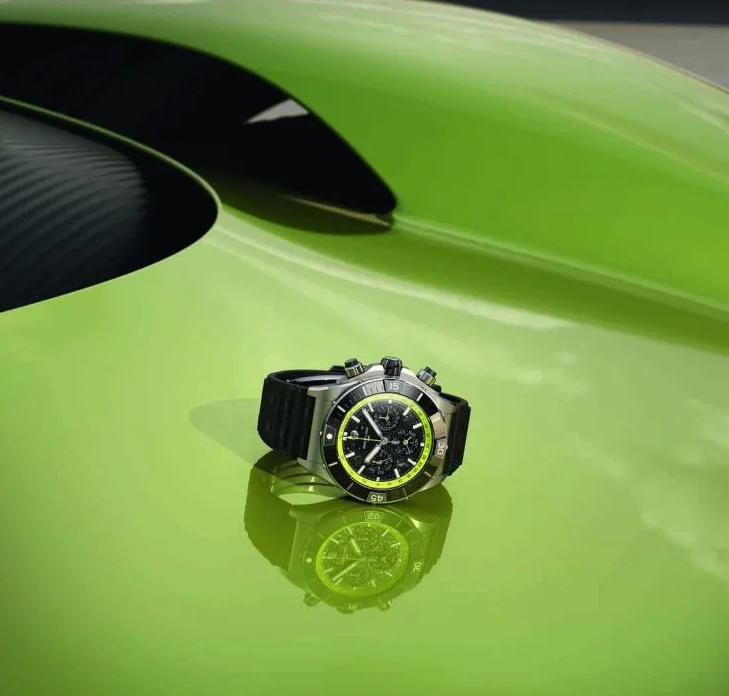
Breitling and Aston Martin have taken their partnership in a more interesting direction with the Valhalla programme. Instead of releasing a single fixed watch with a car logo on the dial, Breitling is giving Valhalla owners the chance to commission a Super Chronomat that reflects the specification of their own car. That makes the project feel much closer to a genuine bespoke programme than a conventional automotive limited edition.
The idea suits the Valhalla particularly well. Aston Martin’s mid-engined hybrid supercar is already built around individual specification, material choice and technical detail, so extending that thinking into the watch feels natural rather than decorative. Only 999 examples of the car are planned, which means the audience for the watch is limited from the start. For YouReplica, a UK site focused on Breitling watches and replica comparisons, that makes the release worth studying in more detail than a standard collaboration.
Why the Super Chronomat Fits the Valhalla
The most obvious question is why Breitling chose the Super Chronomat instead of a more familiar automotive model such as the Top Time. The answer probably comes down to character. Top Time watches tend to lean into vintage motorsport, while the Valhalla is built around hybrid performance, modern materials and advanced engineering. The Super Chronomat has a much more technical presence, especially in its larger chronograph form, so it feels better matched to the car.
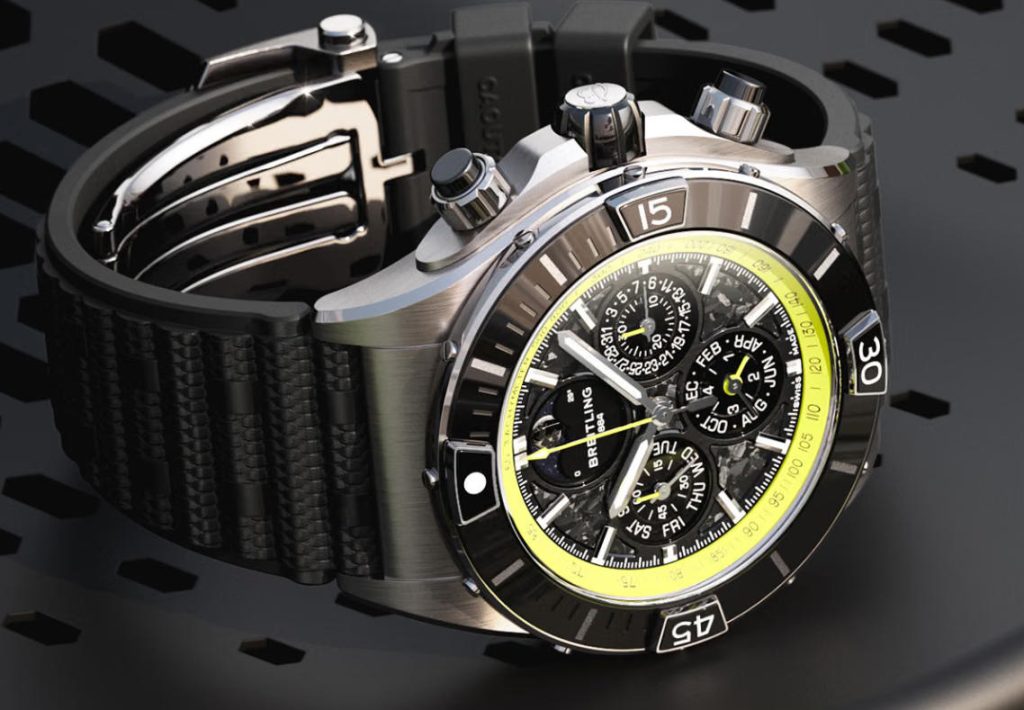
Owners can choose between two very different watches. The more ambitious option is the Breitling Super Chronomat B19 44 Perpetual Calendar Chronograph, which uses a 44mm titanium case and a carbon fibre dial. Inside is Breitling’s B19 manufacture movement, combining a chronograph with a perpetual calendar and around 96 hours of power reserve. It is a complicated, technically focused watch, and that mechanical character fits the Valhalla far better than a simple cosmetic edition would.
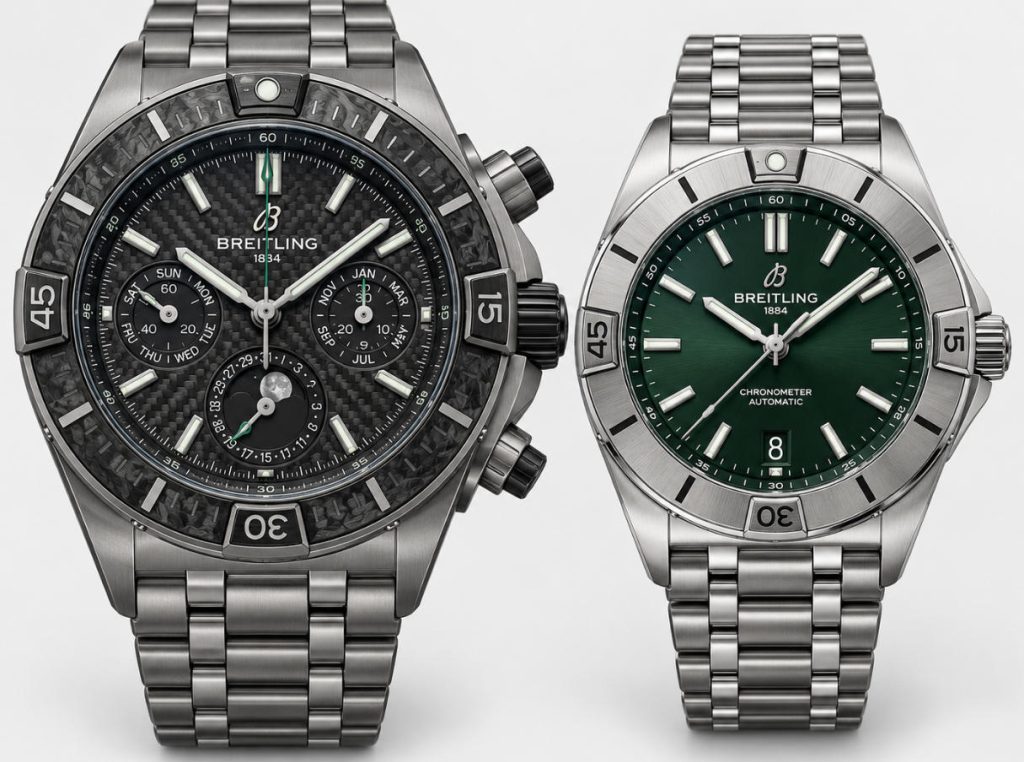
The second option is much more restrained. The 38mm Breitling Super Chronomat Automatic uses a steel case and a simpler automatic layout, making it easier to wear and less demanding visually. That is important because not every Valhalla owner will want a large perpetual calendar chronograph on the wrist. Offering two genuinely different interpretations makes the programme feel more thoughtful than simply producing one watch in several colours.
The dedicated configurator is also central to the idea. Instead of choosing from a fixed set of finished watches, owners can shape the look of the watch around their own car specification. That gives the final result a more personal link to the Valhalla and makes the project feel closer to the way Aston Martin customers already approach the car itself.
The Details That Make the Collaboration Work
Automotive watches often become too literal. Large logos, racing stripes and obvious references can make a watch feel more like branded merchandise than a serious design. The Valhalla project works better because the connection is built through materials, colour and proportion rather than branding alone.
The carbon fibre dial on the Valhalla Super Chronomat is a good example. Carbon fibre already plays an important role in modern performance-car construction, so using it on the dial feels relevant rather than decorative. The titanium case on the 44mm model follows the same logic. Both materials reinforce the technical character of the watch without needing to turn the dial into an Aston Martin advertisement.
I also think the smaller 38mm version matters more than it first appears. It prevents the programme from becoming a single oversized showpiece and gives owners a watch that can work more easily in everyday life. The larger B19 model is clearly the technical flagship, but the 38mm automatic may be the one that gets worn more often.
There is also a natural UK connection here that does not need to be forced into the article. Aston Martin remains one of Britain’s most recognisable performance-car brands, and the Valhalla is closely linked with the company’s Gaydon development base. For a Breitling-focused UK site, the collaboration already has enough British relevance without repeatedly inserting location-based keywords.

The strongest part of the project is that the watch does not seem to be treated as a separate product. It becomes part of the wider Valhalla ownership experience. A customer who has already chosen exterior colours, interior trim and performance options can continue that same design process with the watch. That makes the partnership feel more coherent than many automotive collaborations.
What Replica Watch Readers Should Compare
For readers browsing our Breitling Chronomat coverage, the distinction between the genuine Valhalla watches and later replica interpretations should remain very clear. The original 44mm model is not defined only by its appearance. Its titanium case, carbon fibre dial, B19 perpetual calendar movement and bespoke configuration are all part of what makes it special.
A Breitling Super Chronomat Valhalla replica may reproduce the general look while being very different in weight, movement construction and functionality. The most useful comparison points are case proportions, bezel rider tabs, dial texture, sub-dial spacing, bracelet construction and the way the chosen accent colours sit against the carbon fibre surface.
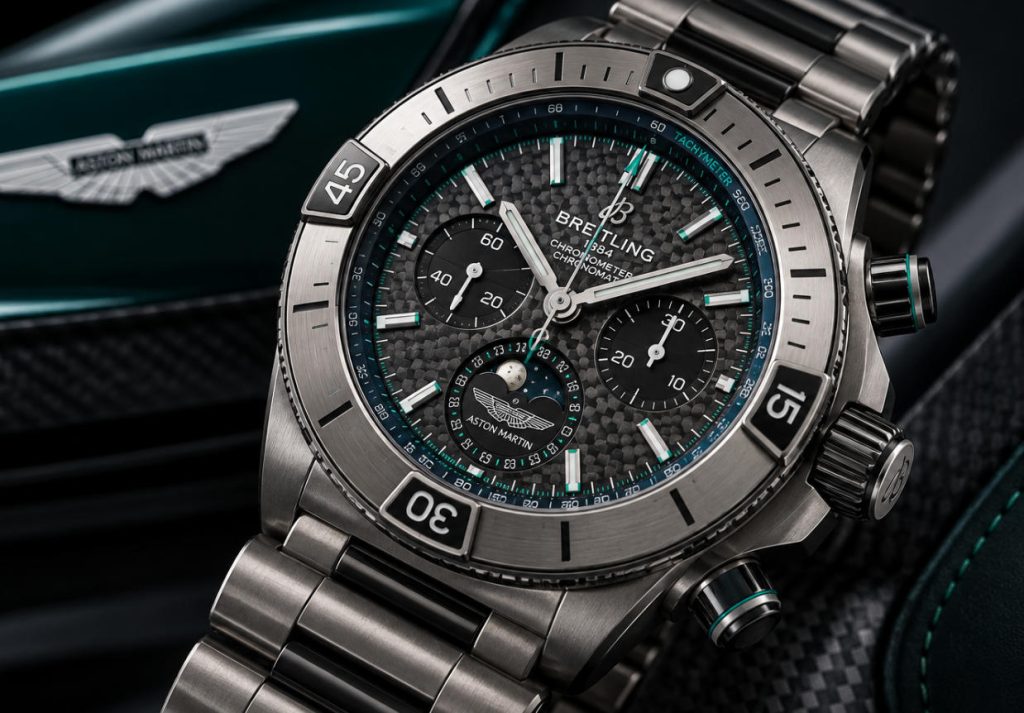
The B19 movement is especially important. A replica can imitate the visual layout of a perpetual calendar without reproducing the actual mechanical function. That difference matters because the original watch is interesting precisely because of the way the complications are integrated into the movement. The same principle applies to the 96-hour power reserve, which should not be assumed simply because the dial looks similar.
The 38mm model presents a different kind of challenge. Because the design is simpler, small proportional errors become easier to notice. Case thickness, bracelet articulation, bezel shape and finishing all matter more when the dial itself is relatively straightforward. A simpler watch often gives inaccurate construction fewer places to hide.
That is why broad claims such as “perfect” or “1:1” are not especially useful when comparing a watch like this. A better approach is to look at the things that can actually be judged: material, weight, dimensions, movement behaviour and visible finishing.
The more I look at this collaboration, the more convincing it becomes. The 44mm B19 version is the more interesting watch from a technical point of view, while the 38mm automatic is probably the easier one to live with. Both make sense for different reasons, and that gives the programme more depth than a normal limited edition.
Most importantly, Breitling has avoided turning the Valhalla into a theme. The watch is being treated as part of the same design conversation as the car, and that is what makes the project work. For a Breitling-focused UK publication, it is a much more interesting story than simply another branded dial.